 Ahenkanfmonline.com Ahenkan 93,3 FM
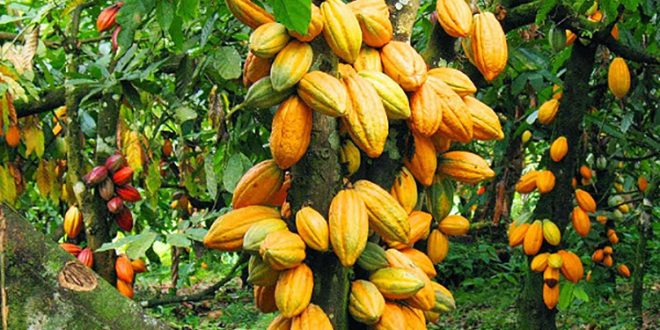
If you walk through the farms in Birim Central, Birim North or across the Akyemansa district right now, the mood is heavy. For many of us, cocoa is not just a crop; it is the lifeblood of our homes. It pays the school fees, it builds our houses, and it keeps our communities alive. So, when the news broke that the price per bag had been reduced, the frustration was real. People are asking questions, and rightfully so.
But to find the truth, we have to look past the political noise and the finger-pointing. We need to look at what is actually happening in the world and how it lands on our doorsteps here in Ghana.
Think back to 2024. It was a wild year for cocoa. Because of bad weather and diseases affecting crops, the world was desperate for beans. Prices on the international market shot up to over $10,000 per tonne. It was a record high that we hadn’t seen in decades.
However, markets are like a pendulum—what goes up eventually comes down. By early 2026, the world market corrected itself. Today, the international price has settled around $3,200. This is a massive drop. When the global price of what we sell falls by more than half, it creates a huge hole in the budget used to pay our farmers.
One thing people often ask is, “Why can’t we just pay based on the high price we see on the news today?”
The reason is how we sell our cocoa. To get the money ready to pay farmers in cash the moment they show up at the shed, the government has to sell the cocoa months in advance. This is called a forward sale. It is basically a contract that says, “I will give you my cocoa in six months if you agree to pay me this price today.”
In 2024, when things were looking good, the government locked in a price that allowed them to pay GH¢3,100 per bag. Later, that was pushed up to GH¢3,625. But as the world price crashed throughout 2025 and into 2026, those old deals ran out. The new deals being signed today are based on a much lower world price.
There is a lot of talk about percentages, but let’s make it simple. In the past, the farmer’s share was usually around 70% of the money the government got from selling the beans. To try and help farmers through this current global crash, the share was actually increased to 90%.
Here is the bitter pill: 90% of a small amount of money is still less than 70% of a huge amount. Even though the government is giving the farmer a much bigger portion of the earnings than before, the total earnings from the world have dropped so much that the price per bag still had to come down to GH¢2,587.
Why This Matters for Akyem Oda and Beyond
For the families in Oda and surrounding villages, this isn’t about politics—it’s about survival. The reduction was a hard choice made to keep the system from collapsing. If the government kept the price at GH¢3,625 while the world was only paying $3,200, COCOBOD would have run out of money completely, and farmers would have ended up with I Owe You “IOUs” instead of cash.
At the end of the day, as long as we only sell raw beans to the world, we will always be at the mercy of these global price swings. The real victory for Ghana will come when we stop being just “cocoa growers” and start being “chocolate makers.”
Supporting local processing and ensuring that at least half of our beans are turned into finished products right here at home is the only way to protect our farmers. When we add value, we control the price. Until then, we must face these market realities with our eyes open and our facts straight.